
Quick Answer
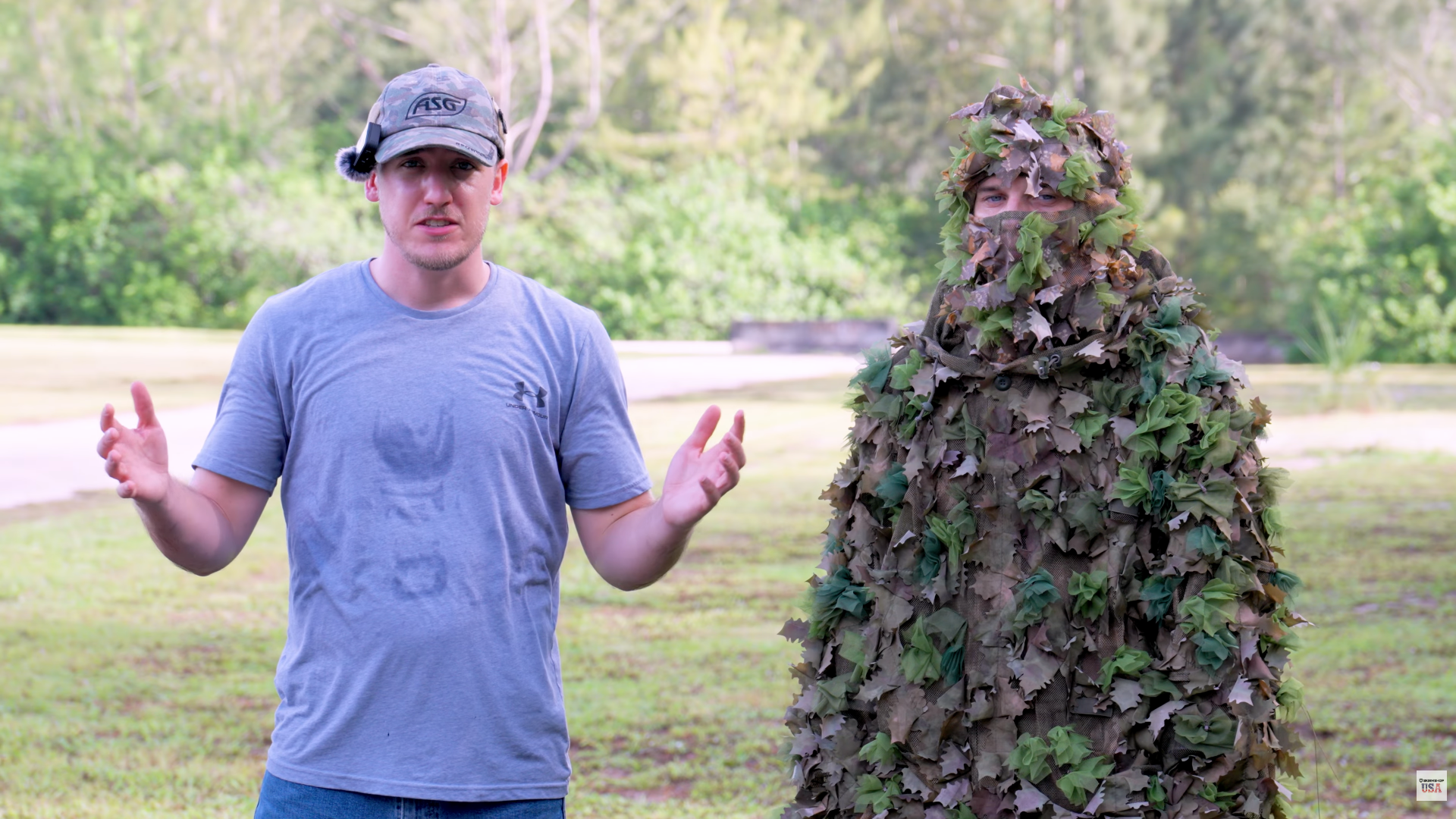
Field Test 1 proved the Stalker system works. It also showed us exactly what needed more coverage. We fixed it — crafted the gaiters, crafted the balaclava, filled the gaps on the suit and pants — and took the full build back into the field. Five hiding spots. The crafting made a huge impact.
The Full Build
Everything crafted. Here's what went into the field:
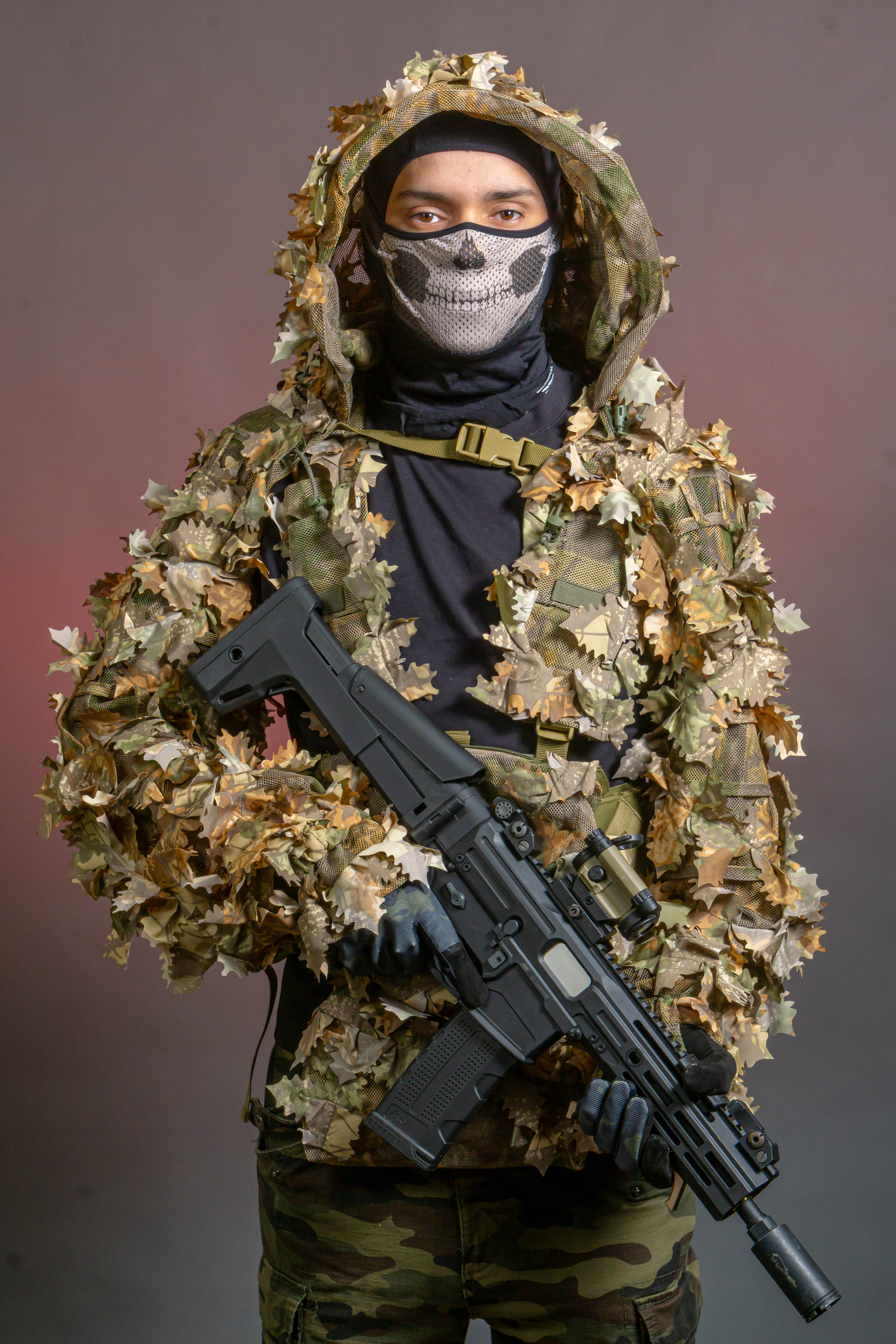
Stalker Alder Leaf Suit Top Crafted with Le Covert Halo Screen Laser Cut Kit — three color shades applied, hood and shoulders fully packed out.
Stalker Brown Oak Combat Pants Crafted with leftover Dark Treeline HaloScreen modules and Oak Master 3D Garlands layered on top for positive space depth.
Stalker Brown Oak Gaiters Crafted with Le Covert Halo Screen Laser Cut TROPIC — all sides covered, front, back, and both sides of each gaiter.
Stalker Brown Oak Balaclava Crafted with Le Covert Halo Screen Laser Cut TROPIC — focused coverage around the face and eye opening. Designed to be worn with the hooded suit on top.

The strategy throughout: green top for the canopy, brown bottom for the floor. Two colorways working together across mixed terrain environments.
What Field Test 1 Taught Us
The first field test identified three things that needed fixing:
The gaiters went in uncrafted — bare brown fabric on the ground was immediately visible. The balaclava went in uncrafted — it held up but wasn't perfect. And the bottom of the Alder top ran short on crafting material during the original build, leaving some areas with less coverage than they needed.
All three were addressed before Field Test 2. The gaiters and balaclava both got the TROPIC Laser Cut Kit treatment. The suit and pants got additional modules in the areas the first test flagged.
The Five Hiding Spots
Spot 1 — Standard Vegetation
First position in mixed field vegetation. Fully crafted kit, same challenge as Field Test 1. The difference from the first test was immediately visible — the gaps that were readable before are no longer there.
What worked: The full build blended into the surrounding environment. This position was noticeably harder to pick out than in Field Test 1.

Spot 2 — Open Field Position
Second position in the same area. Lots of bugs. Different angle, same effectiveness.
What worked: Consistent performance across positions — the suit didn't just work in one spot.

Spot 3 — Thick Mixed Vegetation
The strongest environment for this build. Dense vegetation with a full range of greens mixed with browns throughout. Exactly what the two colorway strategy was designed for.
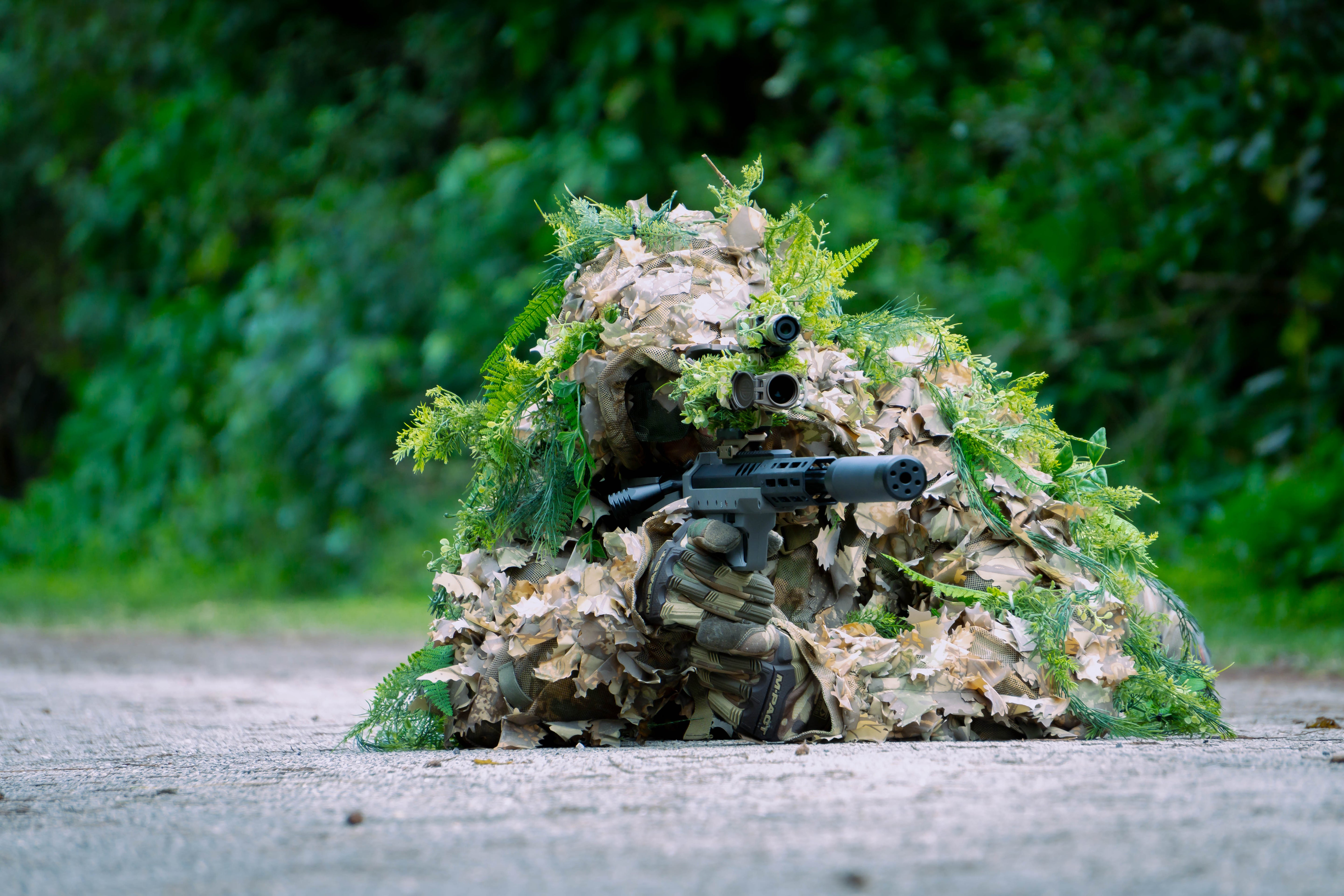
What worked: The Alder top's greens matched the canopy and upper shrubs. The Brown Oak pants and gaiters matched the floor. The Oak Master Garlands on the pants added depth that matched the surrounding 3D vegetation. Nick disappeared into the background completely.

Spot 4 — Path-Side Position
One of the harder tests — Nick hidden just off a path that someone would actually walk along. Not a remote deep-cover position but a realistic scenario where someone passes within close range.
The surrounding landscape had the same brown and green mix — pine needles and wood chips on the floor, shrubs and bushes sticking out above. The build handled both.
What worked: The path-side position is a high-pressure test because distance is reduced and angle varies more. The full crafted build held up.

Spot 5 — Deep Dense Forest
Deepest position of the test. Dense forest, heavy canopy, overlapping vegetation in all directions.
What worked: The build disappeared. Deep forest is where a fully crafted ghillie with both positive and negative space coverage performs best — the HaloScreen fills in the shadows that dense canopy creates, and the 3D garlands and leaf modules blend into the surrounding vegetation.

What Changed From Field Test 1
| Item | Field Test 1 | Field Test 2 |
|---|---|---|
| Alder Leaf Suit Top | Crafted — gaps at bottom | Gaps filled with additional modules |
| Brown Oak Combat Pants | Crafted | Additional coverage added |
| Brown Oak Gaiters | Uncrafted — visible | Fully crafted with TROPIC modules |
| Brown Oak Balaclava | Uncrafted — not perfect | Crafted — face and eye opening covered |
| Alder Crafted Gloves | On | Off (we forgot ;/) |
| Result | Good | Significantly harder to spot |
Key Takeaways
Crafting makes a measurable difference. The same suit in the same environment was noticeably harder to spot in Field Test 2. Every piece that got crafted between the two tests contributed to that improvement.
The two colorway strategy works in mixed terrain. Green top, brown bottom — the build was designed for environments that have both canopy color and floor color. Field Test 2 confirmed that in multiple positions across thick vegetation, path-side cover, and dense forest.
Nothing on the build goes unused. The TROPIC modules on the gaiters and balaclava added green vegetation tones at ground level and face level that matched the surrounding shrubs and plants. Small pieces, significant impact.
The system is modular by design. Every improvement between Field Test 1 and Field Test 2 was a zip-tie addition — nothing permanent, nothing irreversible. The Stalker system is built for this.

Shop The Full Build
| Item | Link |
|---|---|
| Stalker Alder Leaf Suit | Shop here |
| Stalker Brown Oak Combat Pants | Shop here |
| Stalker Brown Oak Gaiters | Shop here |
| Stalker Brown Oak Balaclava | Shop here |
| Alder Crafted Gloves | Shop here |
| Le Covert Halo Screen Laser Cut Kit (Standard) | Shop here |
| Le Covert Halo Screen Laser Cut Kit (TROPIC) | Shop here |
| Le Covert Oak Master 3D Garlands | Shop here |
| Full Le Covert Collection | Shop here |
| Full Stalker Collection | Shop here |
Free shipping on US orders over $200.
FAQ
What's different between Field Test 1 and Field Test 2? Field Test 1 used the crafted suit and pants but uncrafted gaiters and balaclava. Field Test 2 had every piece fully crafted — the improvement was immediate and noticeable across all five hiding spots.
Why two colorways instead of one? Mixed terrain environments have both green canopy and brown floor. A single colorway suit blends into one and stands out in the other. Green Alder top for the trees and shrubs, Brown Oak pants and gaiters for the floor.
How many Le Covert kits does the full build require? The suit top used most of one Laser Cut Kit standard. The pants used leftover Dark Treeline modules plus Oak Master Garlands. The gaiters and balaclava used approximately 25% of one TROPIC Laser Cut Kit each. Plan on two to three kits total for a complete build from scratch.
Can you find Nick in the video? Drop a comment on the YouTube video with how long it took you and which spot was hardest — we want to know.
Watch The Full Field Test
Good To Invisible | Full Crafted Ghillie Suit Field Test 2
The Full Series
- N.P.B.G. E5 — Le Covert Sartorialist Complete Buyer's Guide
- Alder Leaf Suit Top Crafting Tutorial
- Brown Oak Combat Pants Crafting Tutorial
- Field Test 1
- Brown Oak Gaiters Crafting Tutorial
- Brown Oak Balaclava Crafting Tutorial
Built for the long game. Happy Skirmishing. — Skirmshop USA
Share: